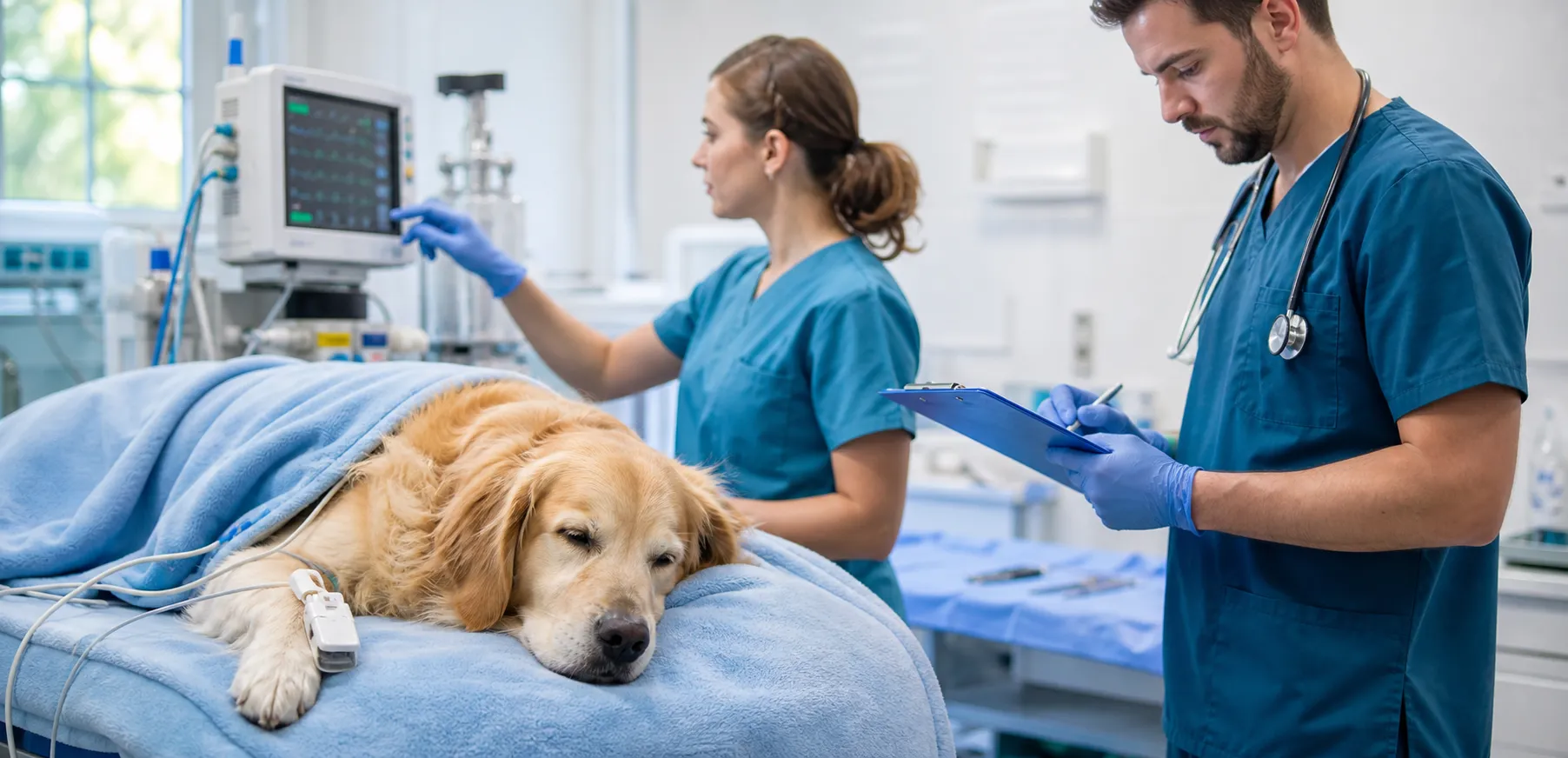
We do a wide range of surgery here in our own hospital. That includes soft-tissue work such as spays, mass removals, and abdominal surgery, and orthopedic work such as TPLO, fracture repair, and correcting kneecaps that slip out of place (patellar luxation). Because surgery stays in-house, the same team that knows your dog handles everything from the first workup to recovery.
Before anesthesia, each patient gets an exam and blood work. Then comes an anesthesia plan made for that dog, IV fluid support, and a team member whose only job is monitoring from the moment your dog goes under until they're awake. We start pain relief before the first incision, and you'll go home with written aftercare instructions and a direct line to our team.
Soft-tissue surgery
- Spay and neuter
- Mass and tumor removal
- Removing swallowed objects from the stomach or intestines
- Removing bladder stones (cystotomy)
- Abdominal exploratory surgery
- Pyometra surgery
- Splenectomy
- Repairing wounds and lacerations
- Amputation
- Other soft-tissue procedures
What to expect
Each surgery comes with an exam and blood work before anesthesia, an anesthesia plan made for your dog with IV support, a team member who does nothing but monitor, and pain relief from several angles that starts before the first incision and continues with the medicine you take home. We'll call you as soon as your dog wakes up.
Orthopedic surgery
- TPLO surgery
- Fracture repair
- Patellar luxation repair
- Femoral head ostectomy (FHO)
- Other orthopedic procedures
Additional surgical services
- Oral and dental surgery
- Eye surgery
- Ear surgery
- Emergency surgery
Guides to specific surgeries
Detailed pages on the surgeries we do most often: what each one involves, when a dog needs it, how long recovery takes, and what results to expect.
Dog Surgery guides & handouts
Handouts from our library that go with this service, to read at home.
Frequently asked questions
Is anesthesia dangerous for my dog?
With current protocols and monitoring, the risk for a healthy dog is very low. Blood work beforehand and drug choices matched to the dog lower it even more for seniors and dogs with health problems. We'll talk honestly with you about your dog's own risk, not just risk in general.
How should I handle the cone and incision at home?
Leave the cone on. A single round of determined licking can ruin a surgery. Look at the incision every day. Some bruising and redness in the first days is normal, but call us if you see discharge, spreading redness, swelling, or gaps. Keep your dog on a leash for all activity until the recheck says otherwise.
What surgeries are done right here?
We perform both soft-tissue and orthopedic surgery in our own hospital, including mass removals, surgery for swallowed objects and bladder stones, wound repair, abdominal exploratory surgery, TPLO, fracture repair, and patellar luxation repair. From the workup before surgery through recovery, your dog is cared for by a team that knows them.
Does my dog need lab work before surgery?
Yes, we require it. Pre-surgical lab work tells us how safe the procedure is likely to be for your dog and how stable their overall metabolism is going in. It is an important step in keeping anesthesia as safe as possible.
What is the vet looking for in pre-surgery lab work?
We check several organ values that show how your dog's body will process, or break down, the anesthetic drugs. We also look at the platelet count; platelets are what help blood clot, so this tells us whether your dog clots normally. And we screen for any other significant abnormalities that would raise concerns about overall health. These results tell us whether your dog's anesthetic risk is higher than usual or whether we need to adjust the plan for the procedure.
Who watches my dog while they are under anesthesia?
Affordable Animal Hospital Orange has a team of veterinarians and technicians. Among the technicians are registered veterinary technicians, who have extra schooling, a license and specific training in anesthesia, and they are the ones who monitor every anesthetic procedure.
How long will my dog take to recover from surgery?
It depends on the procedure. Most soft tissue surgeries, including spays, neuters and wound repairs, take about 10 days to heal fully. Oral surgeries can take one to two weeks, depending on how extensive the extractions are. More complicated procedures, such as extensive wound repairs, may need around two weeks of recovery.
How can I help my dog heal at home after surgery?
Follow the discharge instructions your doctor gives you after the procedure; this is one of the most important things you can do. They explain any medications your dog goes home with, what to feed and how active your dog can be. Limiting activity can be essential for healing. The instructions also tell you whether your dog needs an e-collar or cone, how long to keep it on and what follow-up visits the procedure requires. If anything seems off while your dog is healing, call us.
How do I get my dog ready for surgery?
First, make sure your dog has had a pre-surgical exam with your veterinarian, so you know what to expect. Next, don't feed your dog on the morning of the procedure. Those are the key steps. It also helps if your dog is happy to hop in the car that morning. If you have questions before the big day, call us.
When can my dog come home after surgery?
Most dogs are discharged on surgery day itself, usually late in the afternoon or early in the evening. The doctor will call you once your dog is in recovery to tell you how the procedure went, and you will set a pickup time then.
Will my dog need pain medication after surgery?
That depends on the procedure, but most of our surgical patients do go home with pain medicine. Dogs who have had a spay, neuter, wound repair or mass removal will get pain medication. After a dental cleaning, it isn't always needed. We will talk with you about pain control both before and after the procedure.
Ready to schedule?
Request an appointment at our Orange clinic or call our team — we serve pets and their people across the surrounding communities.
Need help with the cost? Explore financing options